
Marty Reisman was not merely a table tennis champion; he was a defining figure in mid-20th century American sport whose career reshaped competitive play, influenced equipment debates, and inspired the fictional film character in Marty Supreme. Born on February 1, 1930, Reisman went on to win 22 major titles between 1946 and 2002, including two U.S. Opens and a British Open, and became the oldest national champion in a racket sport at age 67 in 1997. His life combined sporting excellence, controversy, entrepreneurship and performance culture — a mix that continues to attract public attention decades later.
Early Life of Marty Reisman and the Making of “The Needle”
Marty Reisman began playing table tennis at age nine after what he described as a “nervous breakdown.” What started as therapy became discipline. His lean frame and fast reflexes earned him the nickname “The Needle.”
Growing up in New York during the 1930s, Reisman entered a city where table tennis had become a low-cost entertainment option during the Great Depression. Public playgrounds and local halls became informal training grounds. By his teenage years, he had already developed the sharp reflexes and verbal wit that later defined his public persona.
At age 14, he moved into a hotel with his father, who worked there and struggled with gambling. From that point, Reisman largely supported himself. As he later recounted, he would attend hotel wedding receptions in his best suit, eat dinner uninvited, and then spend the night playing Ping-Pong for money. यह संघर्ष का दौर था, but it built resilience.
Table Tennis Versus Ping-Pong: A Structural Clarification
The sport commonly known as Ping-Pong is officially table tennis. The difference is largely commercial and regulatory.
In the early 1900s, a toy company trademarked “Ping-Pong,” limiting its formal use. The International Table Tennis Federation adopted “table tennis” to detach the sport from commercial control and allow global governance.
This distinction matters historically because Reisman operated in a period when informal hustling games and regulated tournaments coexisted. He navigated both worlds.
Hustling Culture and New York’s Competitive Ecosystem
New York in the 1930s and 1940s was the national center of American table tennis. According to sports historian Steve Grant, any player seeking championship status needed to prove himself in Manhattan.
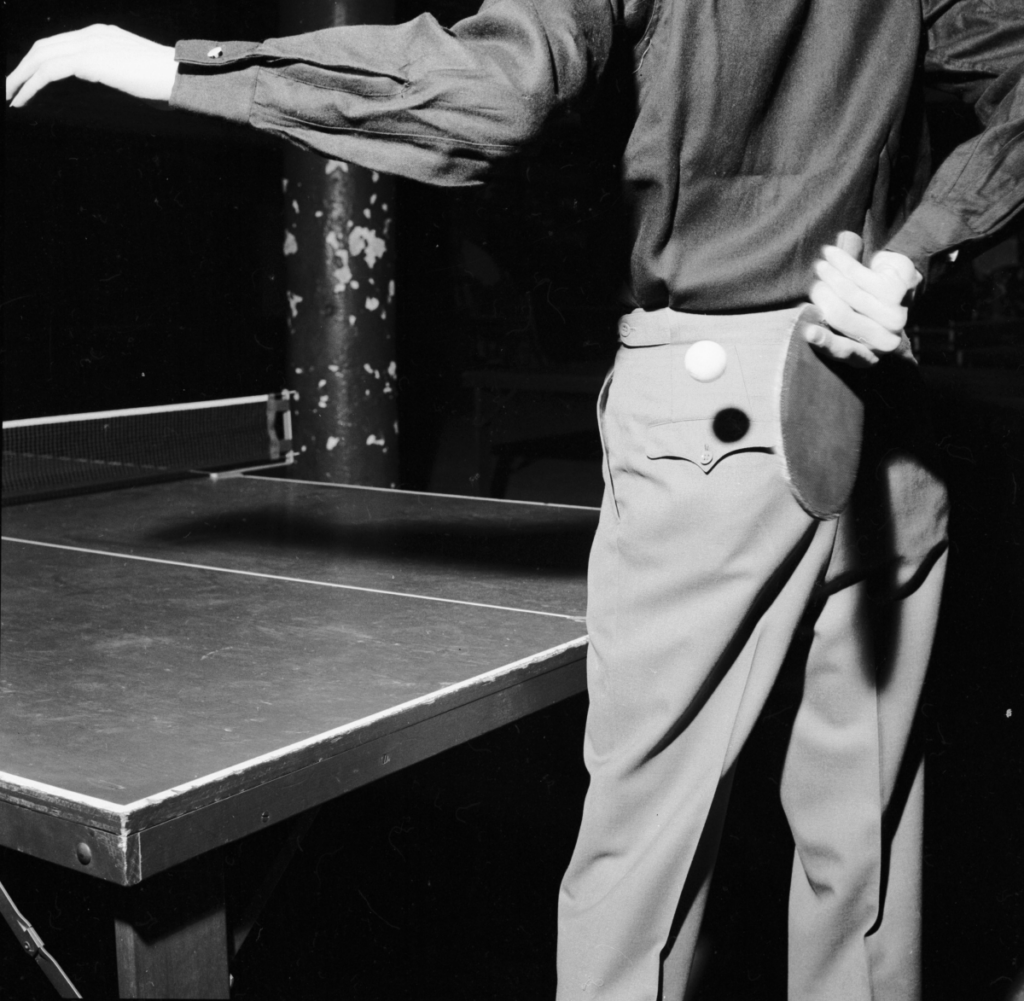
Reisman trained at Lawrence’s, a dive bar described as smoky, crowded and intensely competitive. Players wagered money on matches. Talent improved quickly under pressure. Reisman admitted that when he first arrived, many players defeated him. Over time, he surpassed nearly all of them, except long-time rival Dick Miles.
Several accounts from his memoir describe dangerous encounters during hustling sessions. Some opponents attempted manipulative wagers. These experiences shaped both his caution and his showmanship.
Grant later argued that while hustling sharpened Reisman’s competitive instincts, it may have distracted him from structured tournament preparation. This tension between street competition and institutional sport remained central throughout his career.
Professional Career of Marty Reisman: Titles and Controversy
By the mid-1940s, Marty Reisman had entered professional tournaments. His career was marked by both victories and disputes with officials.
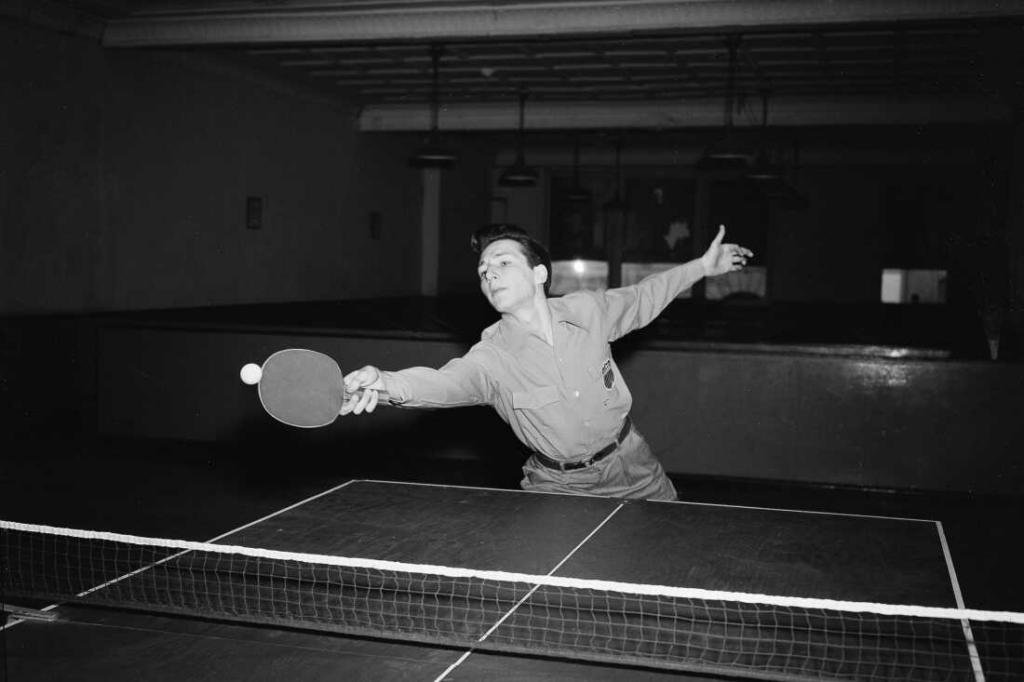
A widely repeated story recounts that at age 15, during a 1945 national tournament in Detroit, Reisman attempted to place a $500 bet on himself, mistakenly approaching the head of the U.S. Table Tennis Association. He was escorted out by police. Later disagreements over gambling, decorum and expenses led to temporary exclusions from events.
Despite controversy, the record stands firm:
Table: Major Milestones in Marty Reisman’s Career
Year | Event | Outcome | Significance
1946–2002 | Major Titles | 22 titles | Sustained elite career
1952 | World Championships | Faced Hiroji Satoh | Equipment turning point
1997 | U.S. National Hardbat | Champion at 67 | Oldest national racket sport winner
These milestones reflect both longevity and adaptability.
Hiroji Satoh, Sponge Bats and the Equipment Revolution
The 1952 World Table Tennis Championships marked a structural shift in the sport. Japanese player Hiroji Satoh introduced a paddle lined with latex sponge.

The sponge bat increased speed, spin and unpredictability. Previously, players relied partly on the sound and rhythm of contact. With sponge technology, rallies accelerated dramatically.
Satoh won the tournament. Reisman, a committed hardbat player, initially refused to adopt sponge equipment. He argued that hardbats preserved a strategic “dialogue” between players, allowing rallies to unfold with tactical nuance. In 1998, he told The New York Times that modern play reduced points to quick wrist movements rather than extended exchanges.
Most competitors eventually transitioned to sponge paddles. The delay in American adoption contributed to the rise of Asian dominance, particularly China, in global table tennis.
Reisman later defeated Satoh in a rematch, showing that adaptation was possible. Yet he remained philosophically aligned with hardbat play.
Marty Supreme: Fiction Rooted in Reality
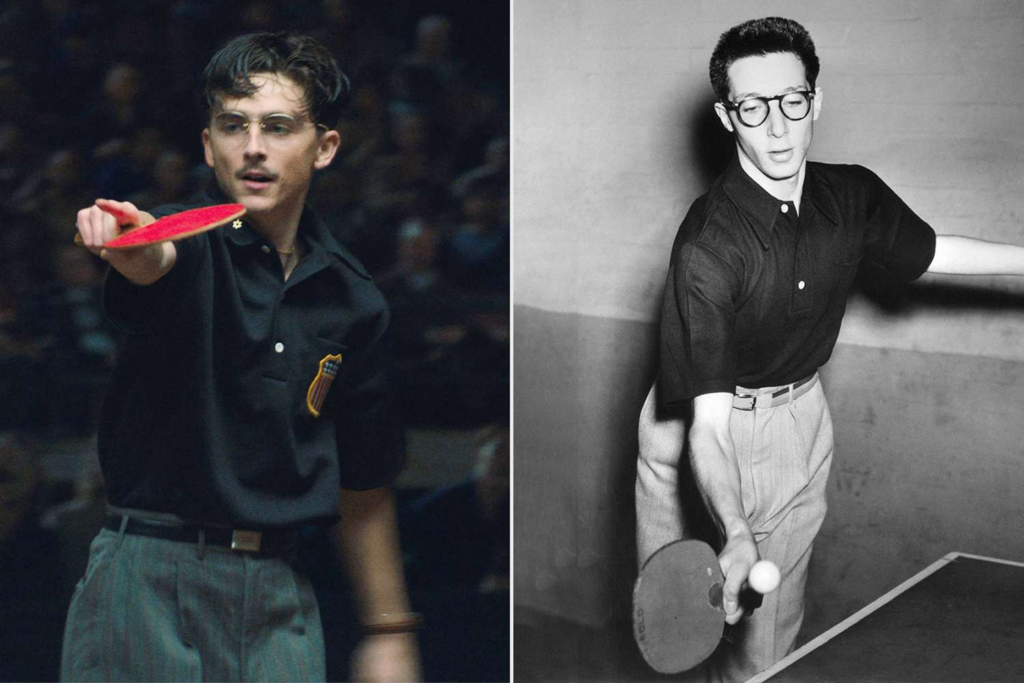
The film Marty Supreme, directed by Josh Safdie and starring Timothée Chalamet as a fictionalized version of Reisman, draws heavily from these formative experiences.

The character Marty Mauser reflects Reisman’s early employment as a shoe salesman and his navigation of 1950s New York’s economic pressures. While the film is not a biopic, it incorporates biographical elements such as hustling culture, rivalry dynamics and financial strain.
Documentarian Leo Leigh has stated that the film captures the broad strokes of Reisman’s life while taking narrative liberties. The rivalry with a Japanese player modeled on Satoh reflects real historical competition, though timelines and settings are dramatized.
The film’s December 25 U.S. release positions it as both sports drama and cultural retrospective.
Later Career, Exhibitions and Public Persona
Beyond tournaments, Marty Reisman spent nearly two decades touring internationally in exhibition matches. He performed alongside the Harlem Globetrotters with Douglas Cartland, entertaining audiences by rallying with frying pans to “Mary Had a Little Lamb.”
He also operated Riverside Table Tennis Courts in Manhattan from the late 1950s onward. The club attracted figures such as Dustin Hoffman, Kurt Vonnegut, Bobby Fischer and David Mamet.
Reisman became known for a stunt: betting he could split a cigarette with a ball from across the table. He demonstrated the trick on The Tonight Show Starring Johnny Carson in 1975 and on Late Show With David Letterman in 2008.
His media instincts were strong. According to coach Larry Hodges, Reisman’s marketing ability matched his athletic skill. He positioned himself as the face of the hardbat revival in the late 1990s and won the inaugural U.S. national hardbat championship in 1997. At 67, he narrowly lost to then-top-ranked Jimmy Butler in a challenge match, despite a 41-year age gap.
Legacy of Marty Reisman in Modern Table Tennis

Marty Reisman died in December 2012 at age 82. His impact extends beyond trophies.
He represented:
- The transition from informal hustling culture to regulated sport.
- The equipment debate that reshaped competitive dynamics.
- The merging of athletics and performance marketing.
In policy terms, his career reflects how technological innovation, governance decisions and commercialization influence sport evolution.
Reisman often exaggerated stories for effect. Yet his achievements remain documented and measurable. As Hodges observed, he drew crowds. He made table tennis visible.
Why Marty Reisman Still Matters
Marty Reisman’s life illustrates how individual agency can shape institutional sport. He competed during economic hardship, technological disruption and shifting governance standards. He adapted selectively, resisted change at times, but remained relevant across five decades.
The release of Marty Supreme renews public interest in this complex figure. For sports historians and policymakers alike, Reisman’s story highlights a central lesson: innovation, personality and regulation together define competitive landscapes.
For readers seeking to understand the roots of modern table tennis — and the personality behind Marty Supreme — the record is clear. Marty Reisman was not simply a champion. He was an inflection point.